The game
Frostwake is a top-down survival game set in a sub-arctic valley in winter. You keep warm, find food and keep a fire going, and the weather changes from day to day, so you plan each day around it.
It is early. There is no playable game yet. What exists is a look test, and that is what this page describes.
Starting over
Frostwake has been made twice before. The first version ran in a web browser, the second in Unity with low-poly art. Neither looked or felt the way the game should, so in October 2026 we started again on everything you see. The survival rules underneath carried over, with their tests.
The camera stays top-down, as it was in both earlier versions. The art is realistic now, and how the game looks matters from the first build, not at the end.
A look test before a game
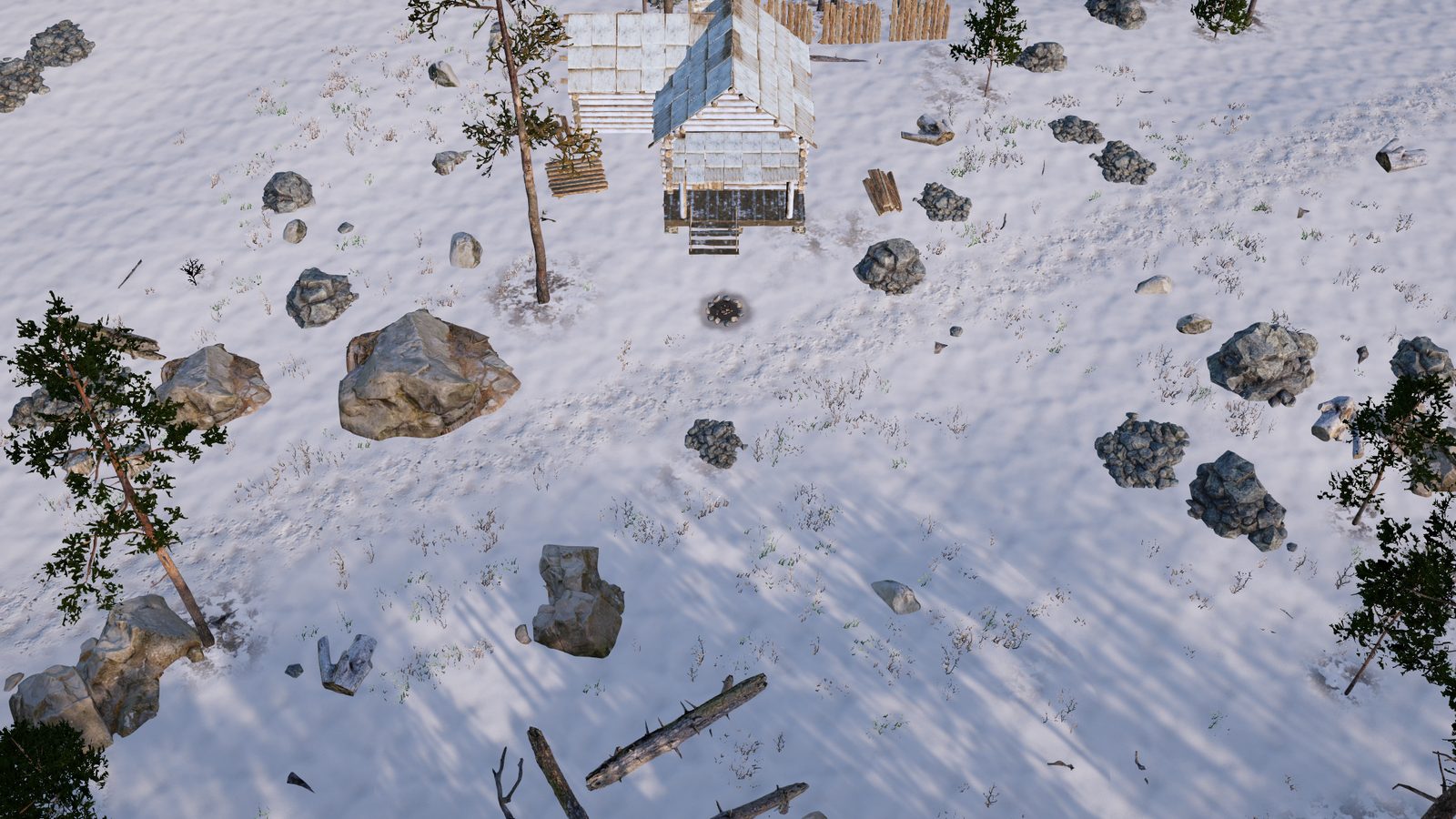
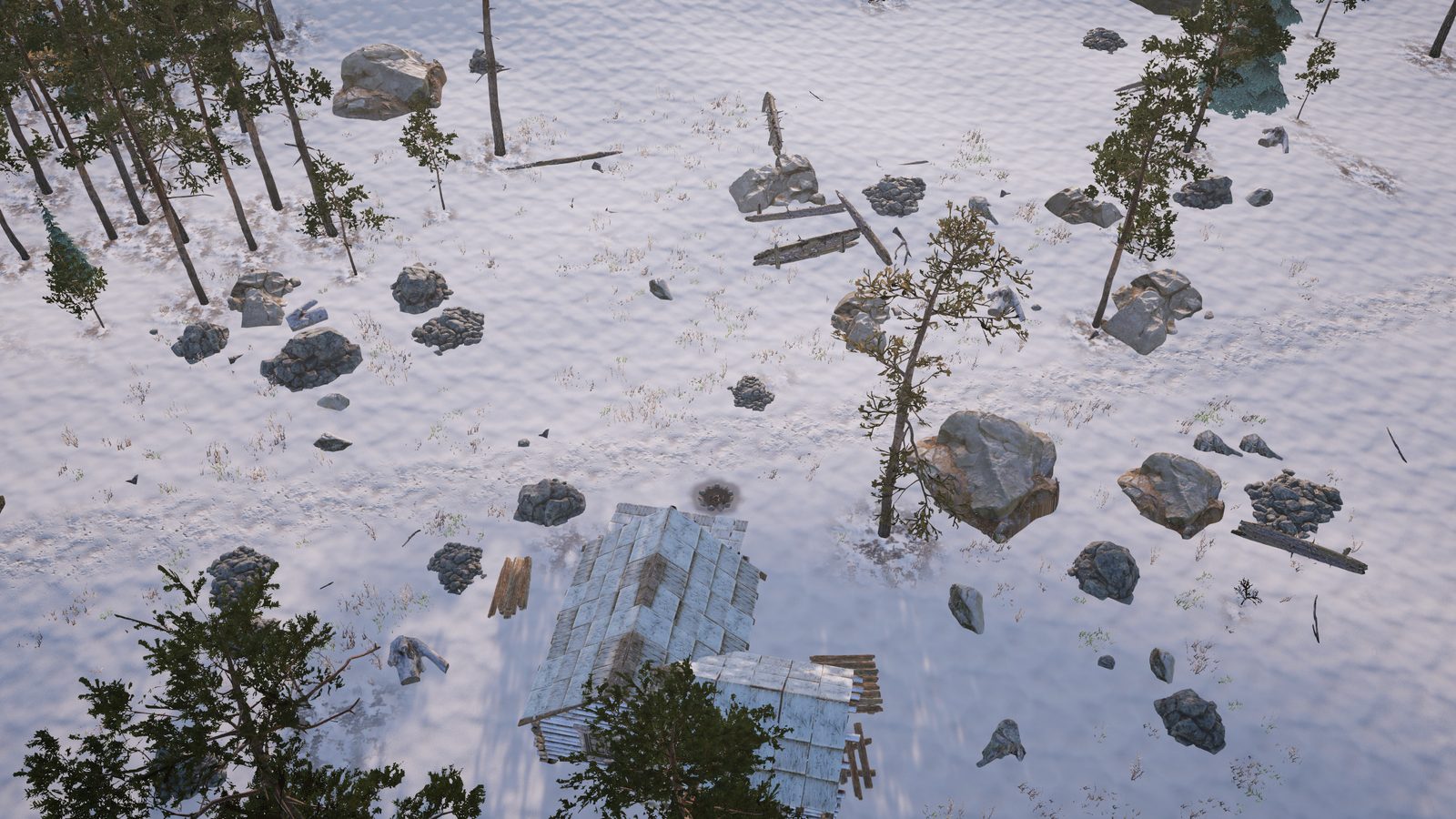
Before any gameplay, we are building one corner of the valley to decide how the game should look. It has snow, pines and rocks, a log cabin, a campfire, the weather and the night, and a stand-in for the survivor.
Every change is captured as full-size pictures and short clips and judged from those files, never from a live view. The designer looks through them in a gallery with a comment field under each picture, and the comments shape the next pass. Nineteen passes went through that gallery in the first two days. Some checks are measured instead of judged by eye. The snow must stay white without blowing out, and in fourteen test frames no pixel reached 250 out of 255.
Weather we built ourselves
The weather package we bought looked right at eye level, but from a camera high above it barely showed. Its fog is made for looking across hundreds of metres. So the weather look is our own.
The sun stands where it would on that date and hour, worked out from NOAA's solar position formulas. The moon follows its real orbit and phase, checked against the solar eclipse of 17 February and the lunar eclipse of 3 March 2026. Fog thickens with distance from the player, not from the camera, so bad weather closes in round the survivor. The wind gusts and turns, and everything that moves reads the same wind: snowfall, flames, smoke, sparks, trees and grass.
Bought, free and our own
The trees, the rocks and the log cabin come from licensed art packs. The flames are a free fire loop of 64 frames released under CC0, played on several overlapping cards so it never shows the same moment twice.
The rest is ours: the fog and the snowfall, the footprints and the snow kicked up by each step, the fire's fuel and the wood you can see burning, the torch and the lantern, and the shaders that draw them.
Smooth first
A better picture that makes the game stutter is no gain, so every addition gets its frame time measured in a release build. On the laptop the game is built on, the look test draws a frame in about 5 to 6 ms on the graphics card at 2560 by 1440.
When the snowfall took 2 ms of the main thread in a blizzard, it moved to the graphics card. Now 80,000 flakes are placed by a shader, and a blizzard's main thread went from 8.0 to 5.8 ms, the same as a clear day.
A designer and an AI agent
The code is written by an AI coding agent working with a human designer. The designer sets the direction, judges every pass and decides what stays. The agent writes and tests the code, builds the scenes, captures the pictures and clips, measures the frame time and drafts the devlog. Anything that changes how the game looks or feels waits for the designer's verdict.
We think a lot of games will be made this way. Every step is written up in the devlog, including the ones that went wrong.
What comes next
Once the look is settled, the survivor replaces the stand-in, and then comes the first playable build. There are no dates yet.