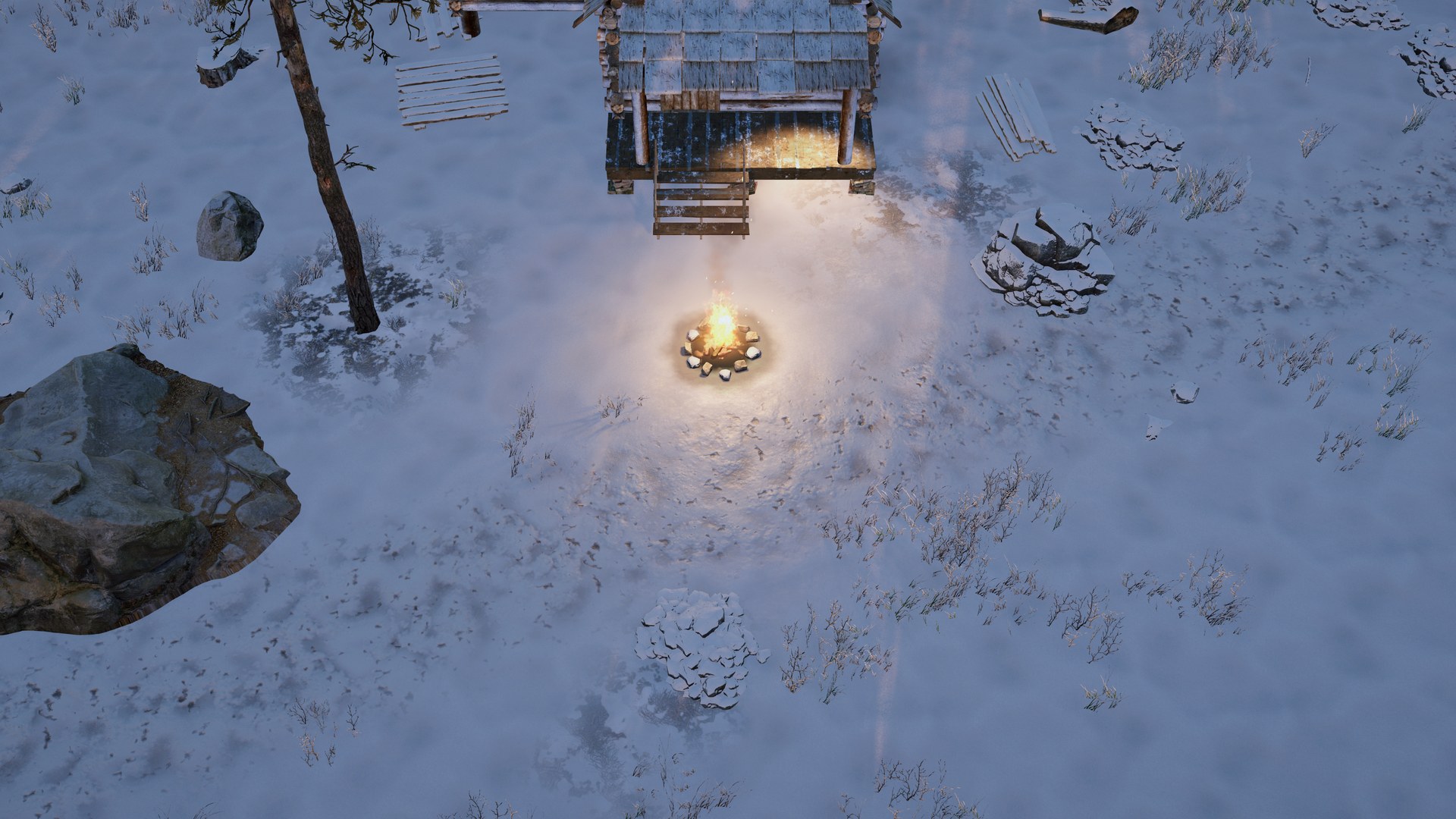
1 March16:00 to 19:00Clear
Frostwake
A top-down survival game in a frozen valley. Keep a fire going, and plan each day around the weather.
In early development. Everything on this page comes from the current look test.
About the game
Frostwake is a survival game set in a sub-arctic valley in deep winter. You stay warm, find food, keep a fire alive and learn the land and its wildlife.
The weather changes from day to day. One day the sun hangs low and clear, the next a blizzard closes the world in to a few metres round you.
Top-down · Realistic · Made by Agentas in Norway
Every day has its own weather
The same spot by the cabin at half past twelve, in each kind of weather the game has so far. The worse it gets, the closer the world closes in.
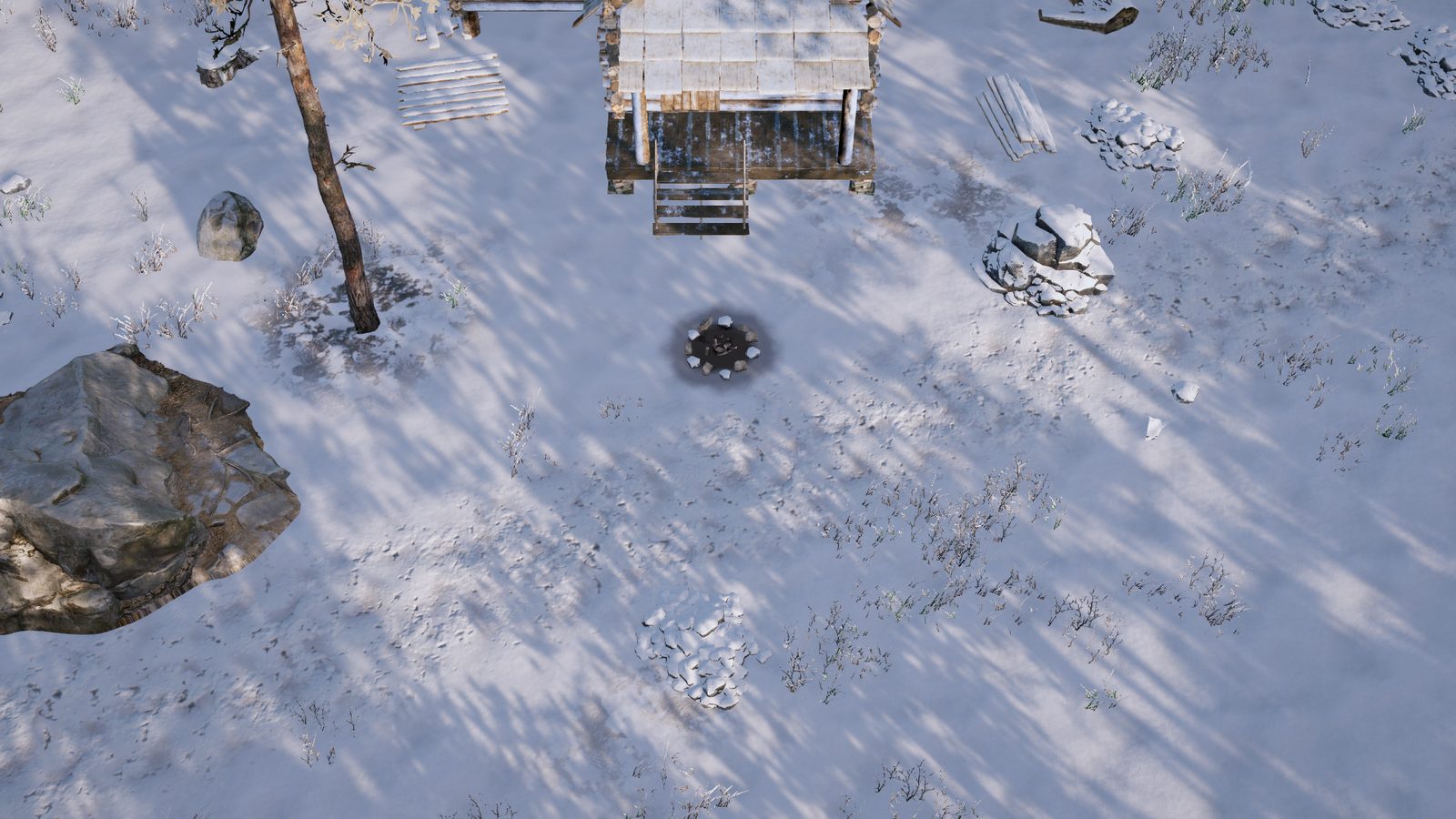
12:30ClearSight about 250 m
A low winter sun and long shadows. You can see the whole valley floor.
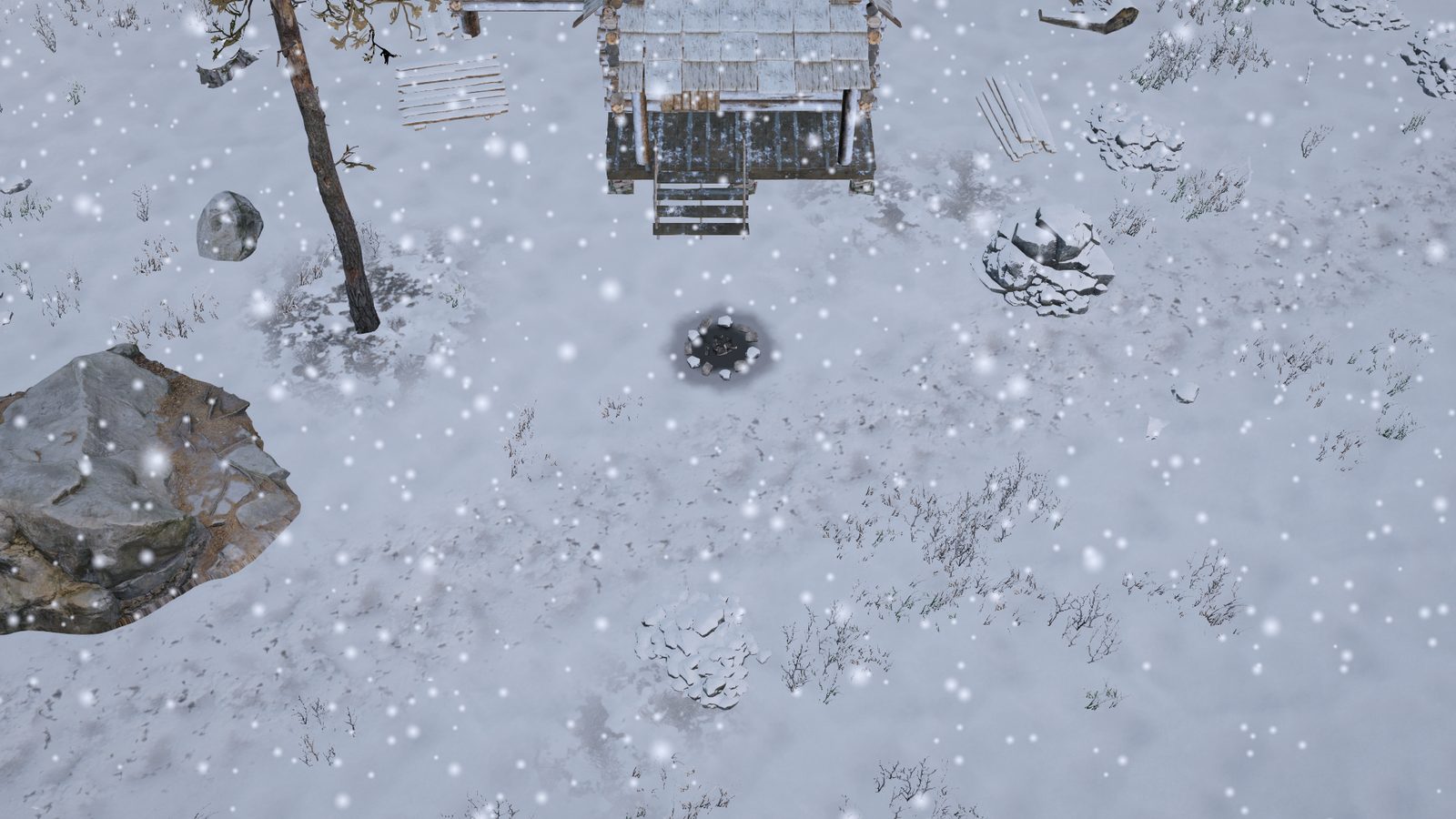
12:30Light snowSight about 50 m
Flakes drift down, the shadows fade and the far side of the valley goes soft.
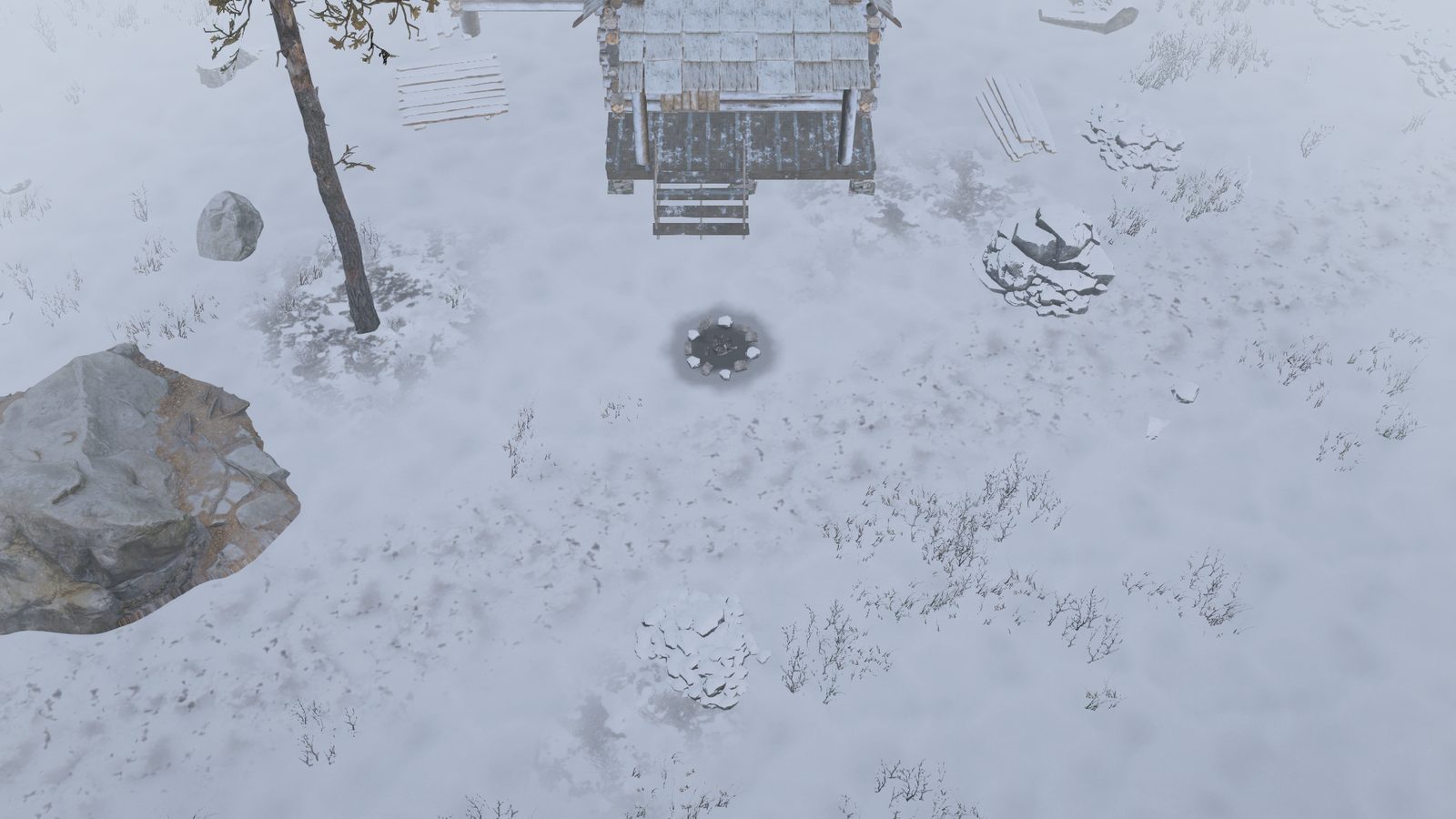
12:30FogSight about 30 m
Still air. The cabin is a grey shape, and the trees behind it are gone.
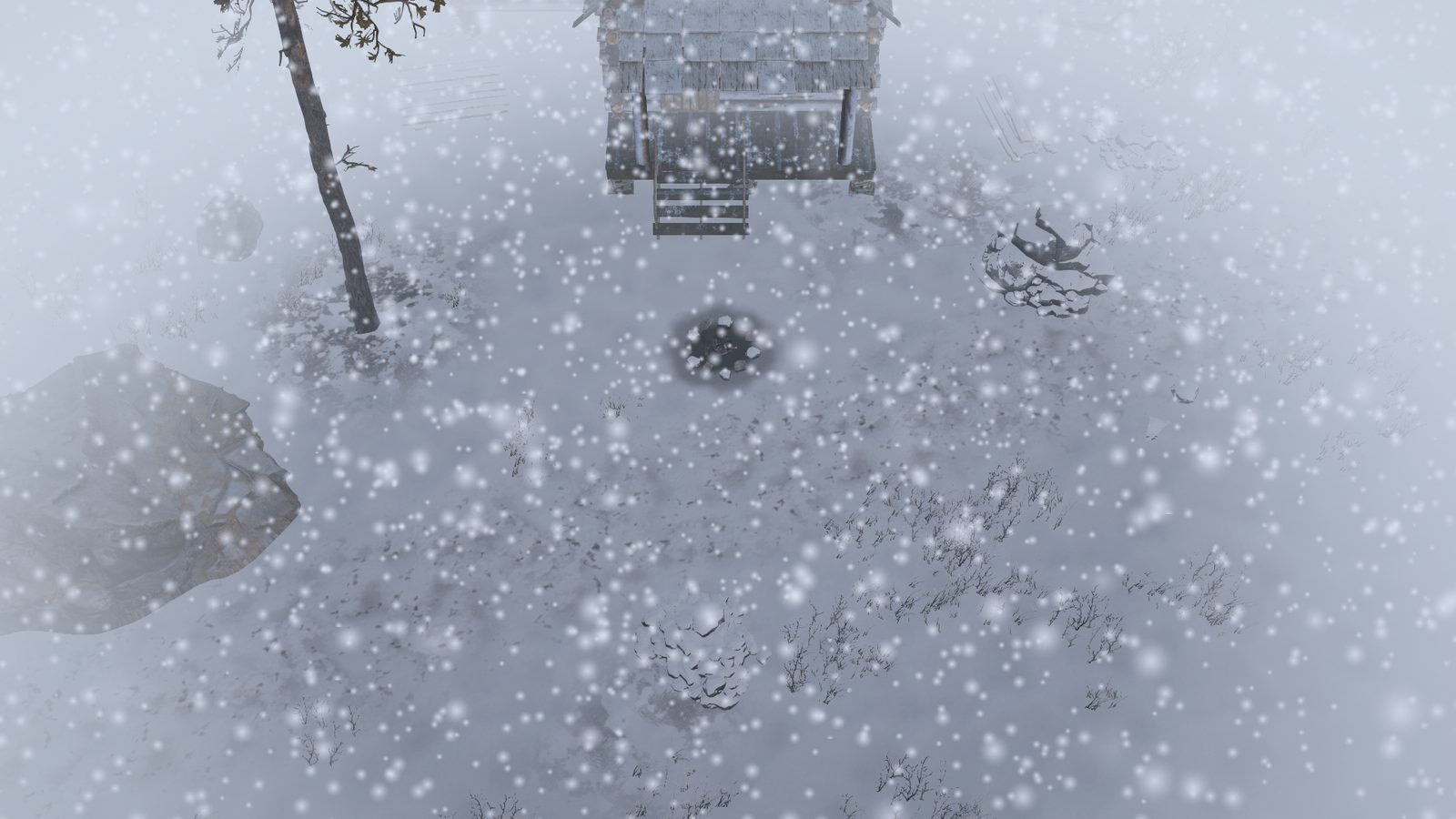
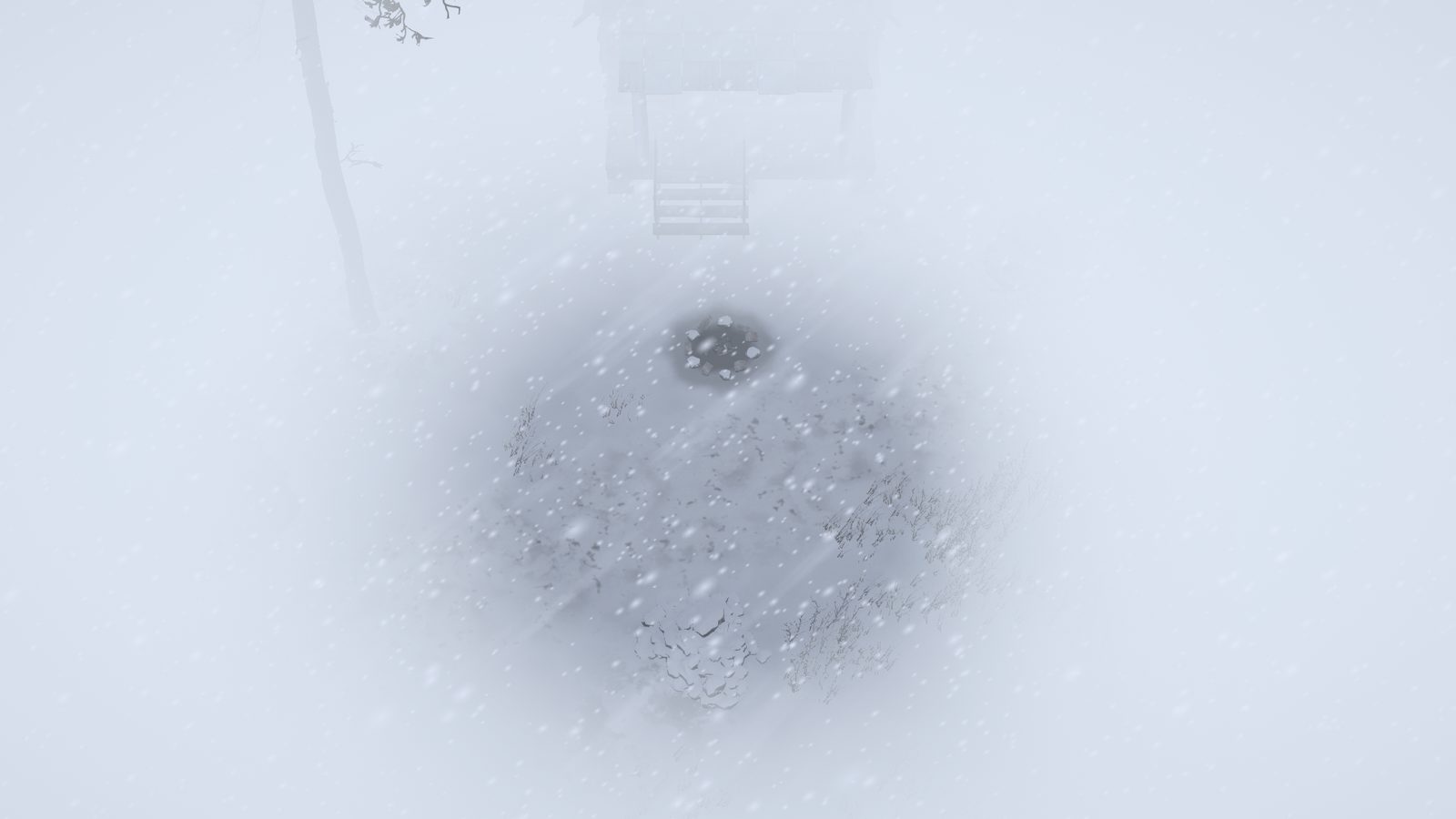
12:30Heavy snowWind 5 m/sSight about 18 m
The wind picks up and the snow comes thick. Past eighteen metres there is little to see.
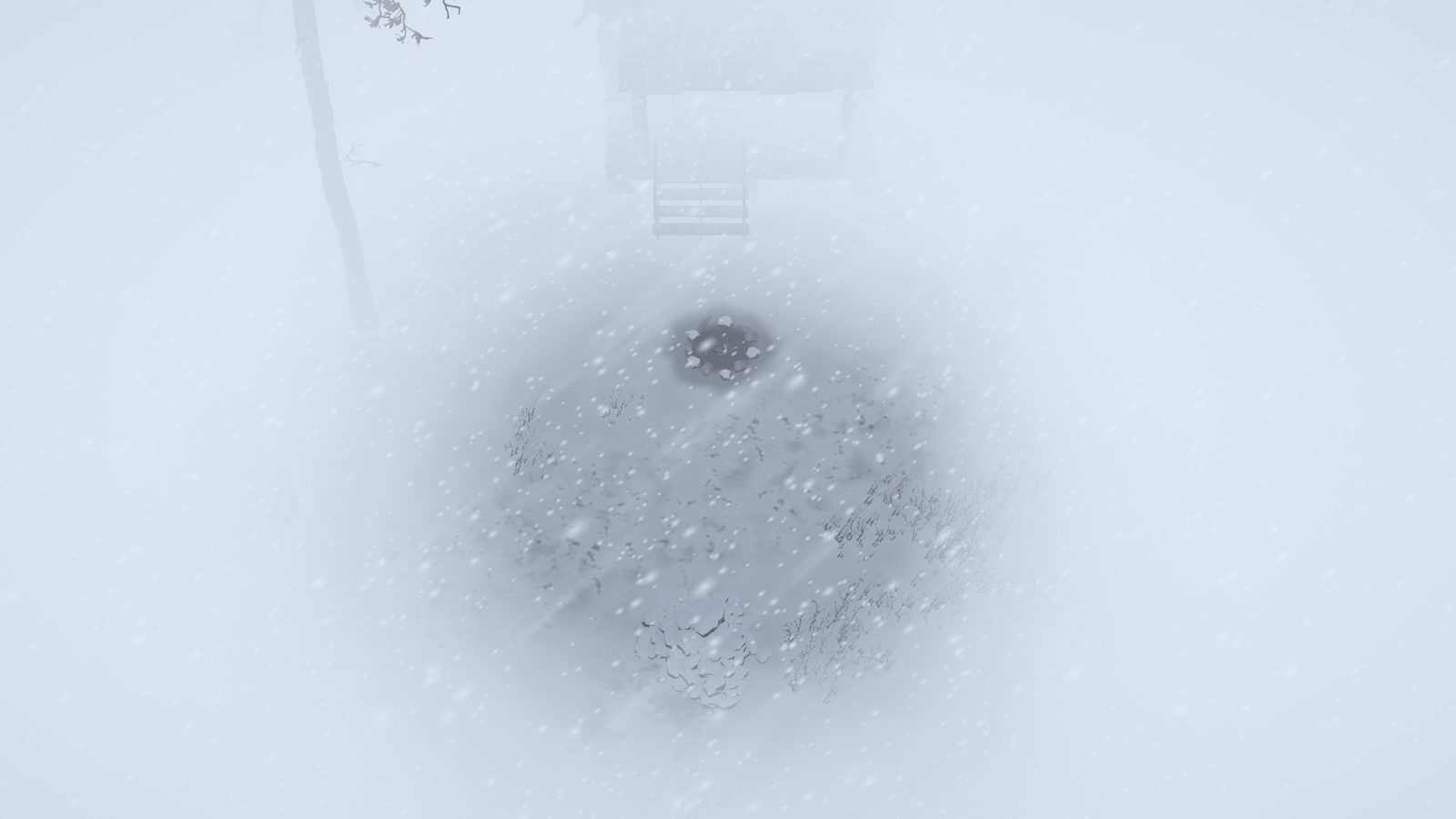
12:30BlizzardWind 16 m/sSight about 8 m
A cabin thirteen metres away is gone. A lit fire still glows through.
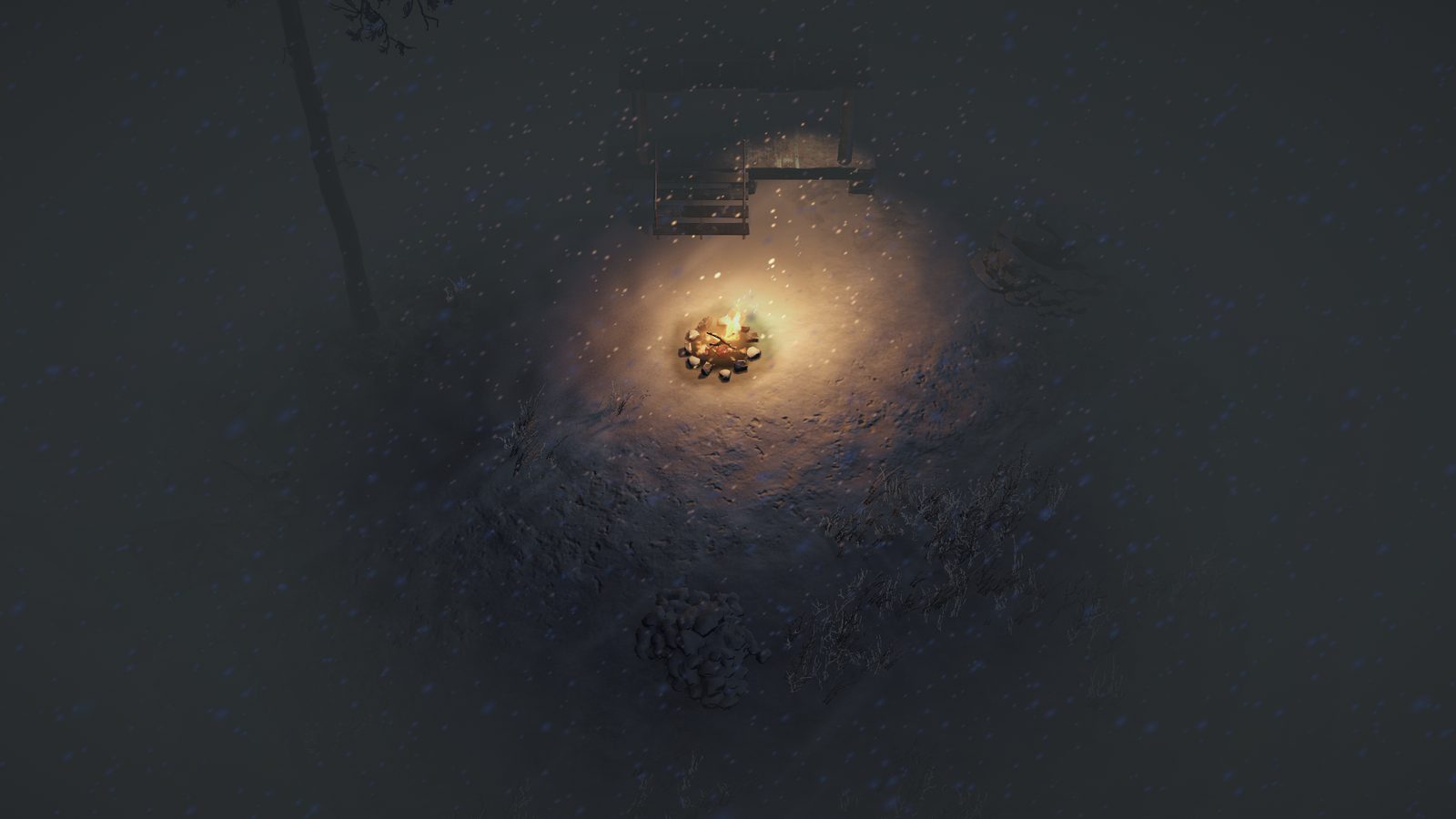
22:00BlizzardWind 16 m/sCampfire lit
At night in a blizzard the only thing you can make out is the glow of a fire.
The weather moves in
Weather does not switch from one kind to the next. The light, the wind, the snow and the distance you can see all change together. Here a clear midday turns into a blizzard in twenty seconds, so it fits in one clip.
A fire you can read
The campfire is the heart of the game, so it got the most work.
Fuel you can see
The flames come from a free fire loop of 64 frames, played on overlapping cards so it never shows the same moment twice. They lean with the wind. A fire with hours of fuel burns tall and bright, and one with minutes left is a few low flames over red coals, so you know when to feed it.
22:00Clear3 hours of fuel
Every stick, branch and log you put on lies in the fire as its own piece and burns down, oldest first.
Light you carry
Nights are dark. What light there is comes from the moon and from the fires you light.
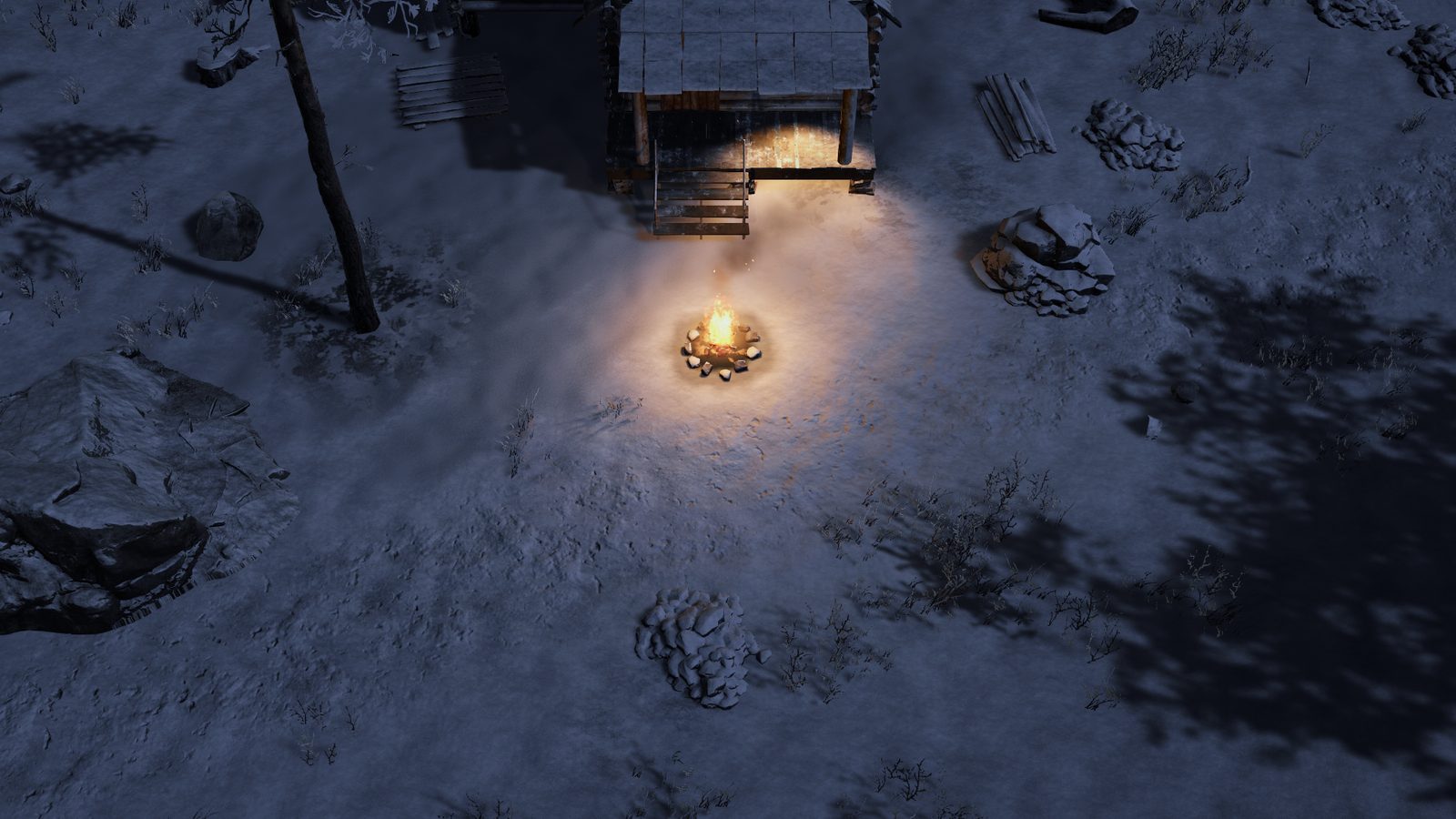
Moon and fire
The moon follows its real path and phase, so a clear night near full moon shows you the valley and a cloudy one does not. Away from the fire, a torch or a lantern in your hand makes a small circle of warm light that you walk inside. The devlog shows them both.
22:00ClearTwo nights before full moon
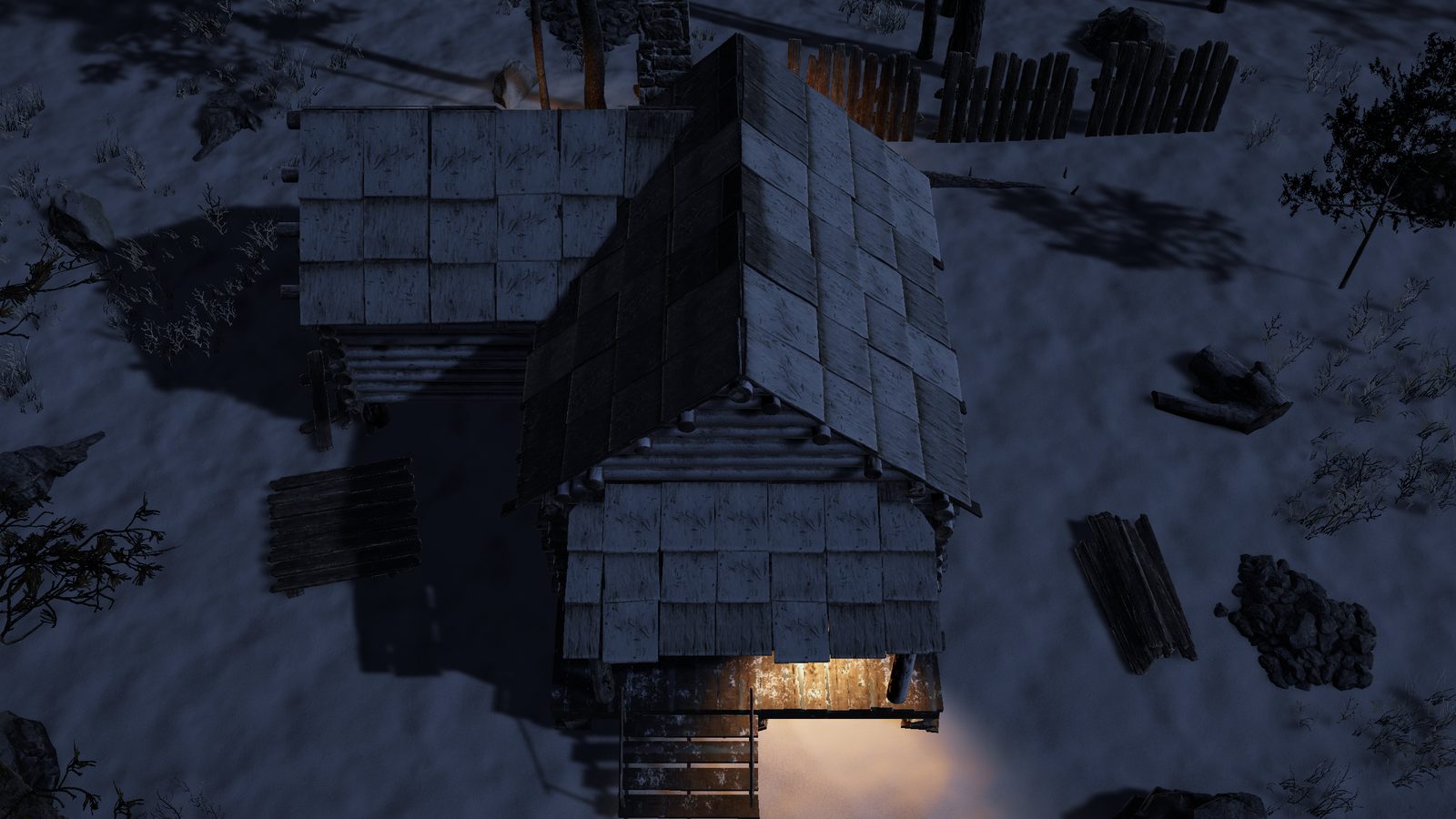
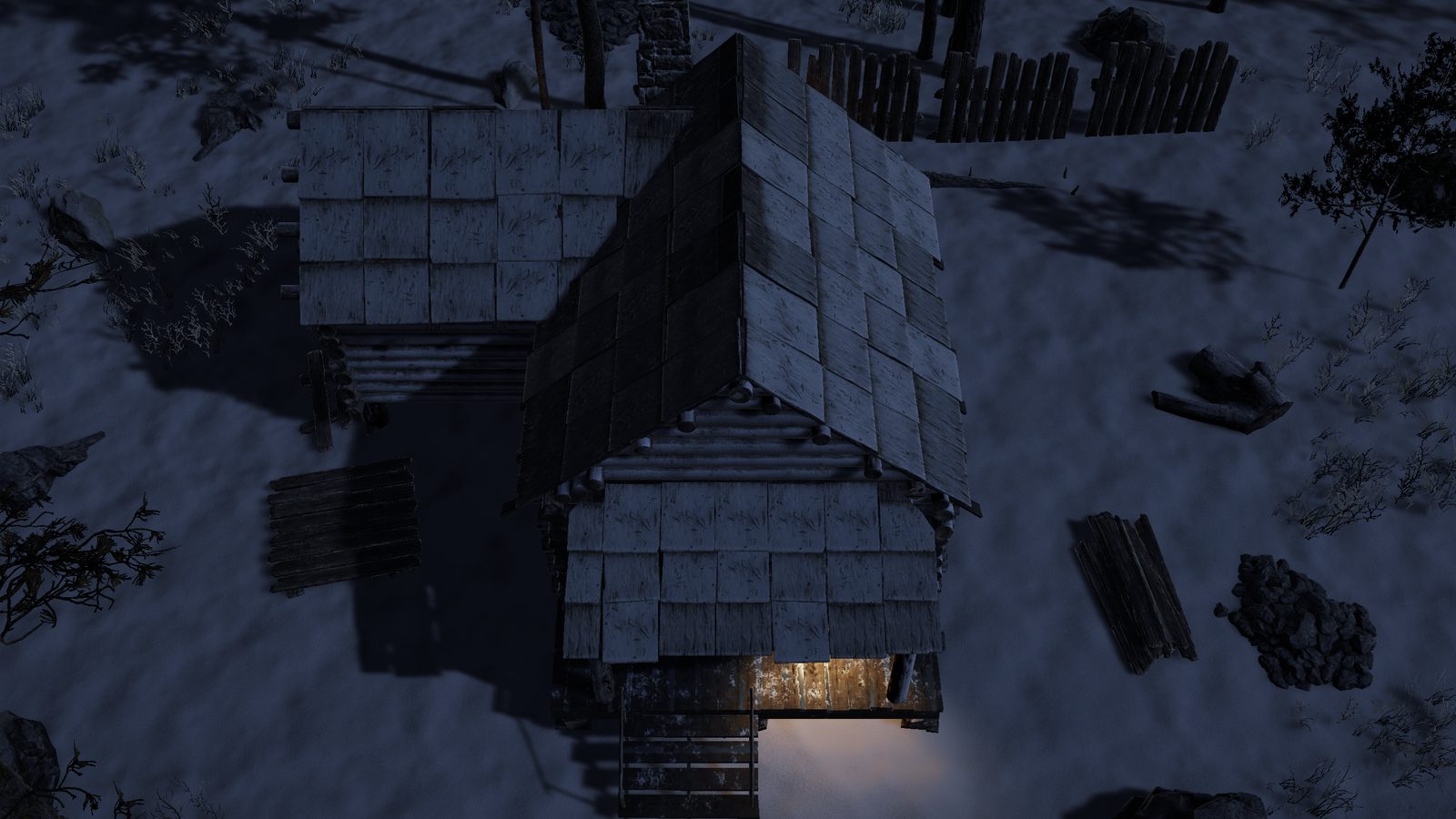
A cabin in the dark
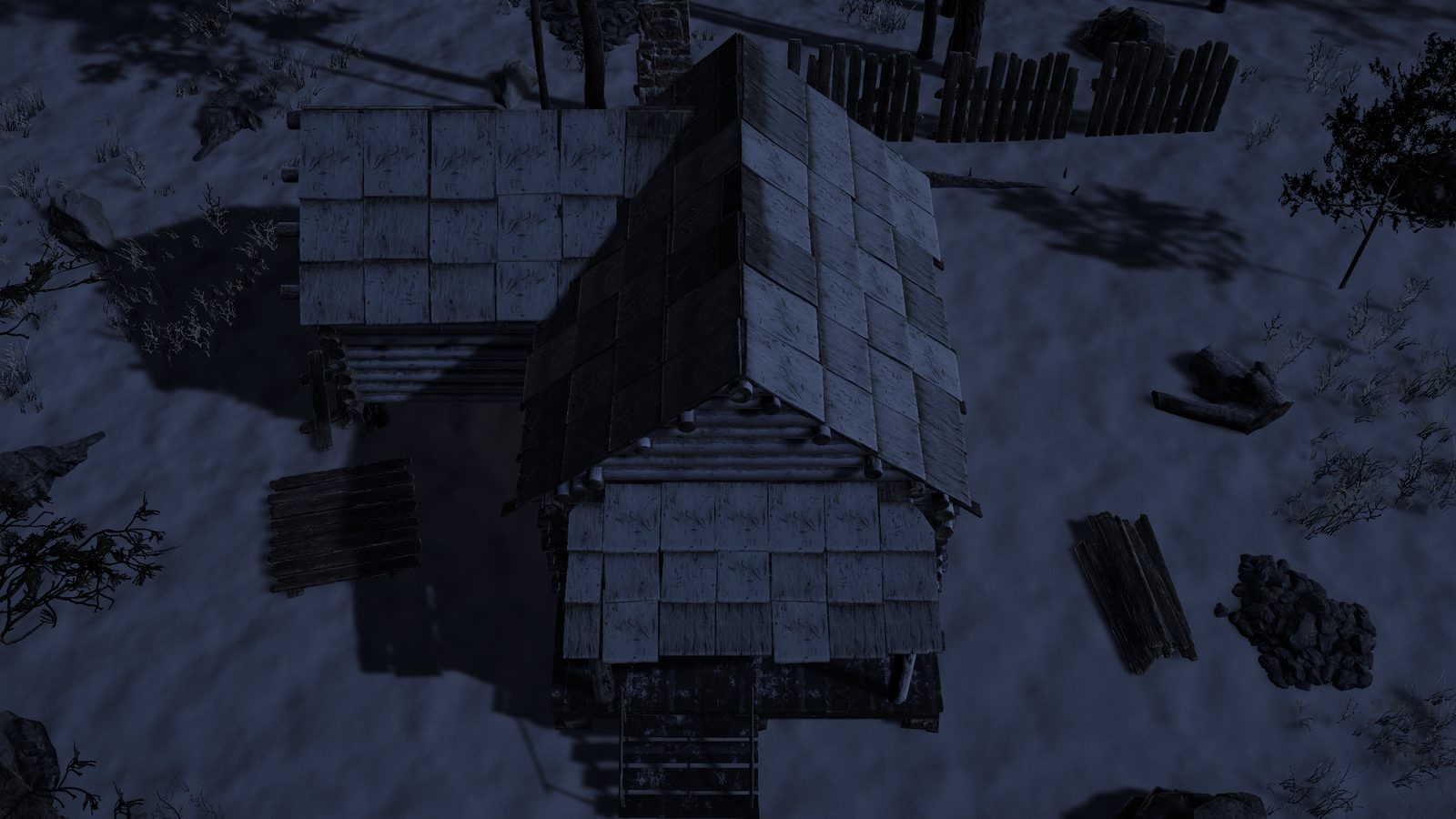
A cabin stays dark until someone lights a fire or a candle inside. Then its light spills out over the snow, bright for the stove and dim for a candle, and you can see from outside that somebody is home.
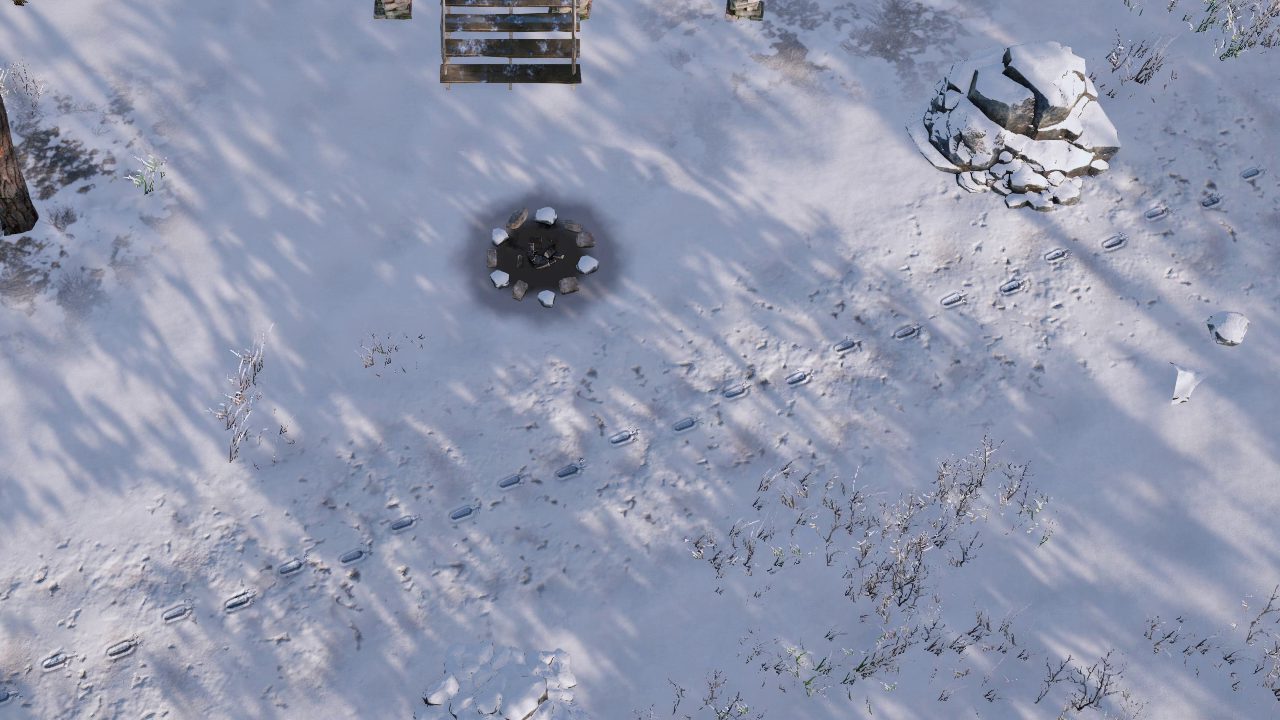
Snow that keeps your tracks
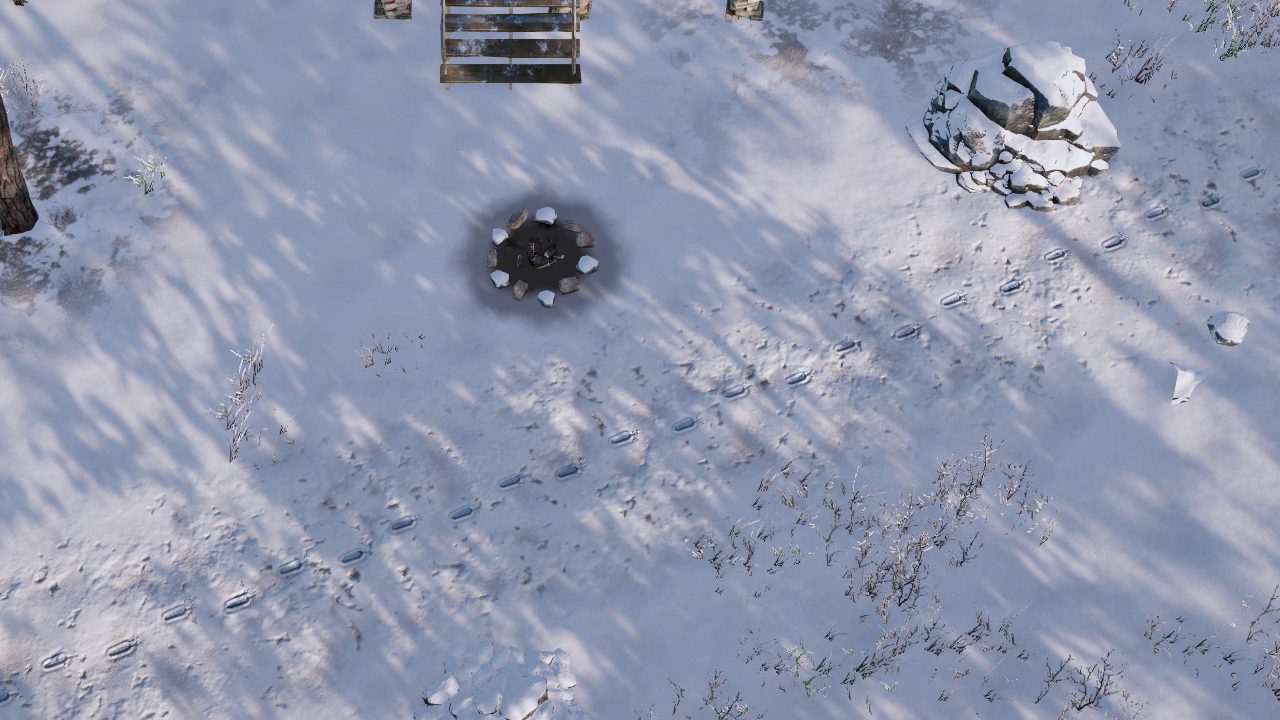
Every step leaves a print with a drag mark from the toe, and snow sprays off the boot as it lifts. New snow fills the prints again. Light snowfall takes about three hours, a blizzard about fifteen minutes.
12:30ClearNo new snow, so the trail stays
Where it stands
Frostwake is early. Before the game is built, we are settling how it looks.
The look test
BuiltOne corner of the valley with its weather, fires, night light and snow, judged pass by pass from captured pictures and clips.
Settling the look
We are hereThe last checks on the look and the weather: how smoothly it runs, and how it holds up next to the pictures we aim for.
The survivor
NextA character in layered winter clothing who reads well from above. The look test has only a stand-in so far.
The first playable build
After thatCold, hunger, fire and weather as rules you play by, not only pictures.
There are no dates yet. The devlog says when a step is done.
Follow along
Frostwake has no store page yet. Every step goes into the devlog first, with the pictures and clips that came out of it.